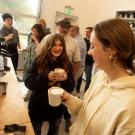
A $1 million endowment from the Specialty Coffee Association will provide lasting support for graduate student researchers at the UC Davis Coffee Center and help prepare future leaders in coffee science.
From GLP-1 treatment to upcycling coffee and legume waste streams, students tackled real food-related issues with an entrepreneurial mindset in Innovation for Impact: Food Systems, colloquially called “Hacking 4 Food.” Instructor and facilitator Alice Dien, a Ph.D. candidate in biological systems engineering, shares her reflections.
Coffee professionals, including founding director William Ristenpart, share their reflections on the legacy of pioneers of Californian coffee, the Ruskeys.
The University of California, Davis, has received three significant collections of coffee-related materials that together illuminate the history, science and global impact of specialty coffee.
by Antoine Abrieux, UC Davis Innovation Institute for Food and Health
Caffeine—the world’s most widely consumed psychoactive compound—was the focus of a two-day gathering at UC Davis that brought together researchers, industry innovators, and students to explore the science, technology, and health implications of coffee. Hosted by the UC Davis Coffee Center and the IIFH with support from Cornucopian Capital, this event examined caffeine’s journey from processing to human metabolism. IIFH Discovery Forums bring together leading scientific researchers, clinicians, investors, and business leaders to discuss specific areas in food for health innovation.
Phoebe Sothern, a fourth-year art studio major with a passion for illustration and curiosity for what goes into a great cup of black coffee, is the creative mind behind three new coffee bean bag designs hitting the shelves at UC Davis Stores this November.
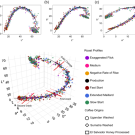
A new Scientific Reports study by UC Davis Coffee Center researchers shows that coffee beans follow a universal color curve during roasting, offering significant implications for the coffee industry and how “light,” “medium” and “dark” roast levels could be more consistently defined.
Researchers at the UC Davis Coffee Center found that cold brew coffee might not need 24 hours to shine. Their study reveals roast level and brew temperature matter more than time — offering new insights for commercial brewers and curious caffeine lovers alike.
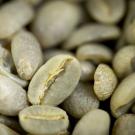
UC Davis Coffee Center researchers, in collaboration with the Coffee Science Foundation, are investigating how physical defects in green coffee affect flavor. By identifying sensory thresholds for defects, their work aims to refine coffee grading standards and improve quality assessment in the coffee industry.
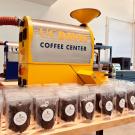
As the first academic research facility in the U.S. dedicated to coffee, the UC Davis Coffee Center is brewing up serious science. From roasting chemistry to flavor perception, Professor Bill Ristenpart talks with Atlas Obscura about the center’s mission to uncover what makes the perfect cup.
Researchers at the UC Davis Coffee Center have collected years’ worth of data to update the decades-old Brewing Control Chart. The new Sensory and Consumer Brewing Control Chart combines new coffee science with consumer research and a more user-friendly approach.
Biological systems engineering master's student Willian Klippel-Huber hopes to take what he learns in his research at the UC Davis Coffee Center back to help his home community in Brazil, where he grew up on a coffee farm.