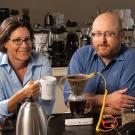
A UC Davis study analyzes roasting techniques to provide key insights into the acidity of coffee beans, paving the way for coffee roasters to better control the quality and flavor of their coffee.
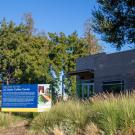
The Coffee Center at the University of California, Davis, officially opened Friday, May 3. The Coffee Center is a center of excellence in the UC Davis College of Engineering and the first academic research and teaching facility in the U.S. entirely dedicated to the study of coffee.
We developed The Design of Coffee as a freshman seminar for 18 students in 2013, and, since then, the course has grown to over 2,000 general education students per year at the University of California, Davis.
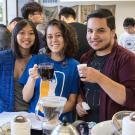
It’s a scorching summer morning at UC Davis, but inside a laboratory at Everson Hall, about 20 students are busy brewing hot cups of joe. They’ve just completed a competition to brew the perfect cup of coffee — and earned college credits at the same time.
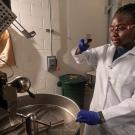
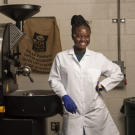
Coffee roasting is a crucial step in manufacturing and selling coffee. However, the exact chemical and kinetic changes that occur to coffee beans during the process are still relatively unclear.
A recent study from the UC Davis Coffee Center asks the question: “How hot do you want your coffee to be?” Most people like and expect their coffee to be hot, but getting the temperature right is an important consideration for cafés to maximize satisfaction.
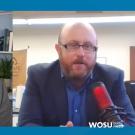
UC Davis Coffee Center director and Chemical Engineering Professor William Ristenpart sat down with WOSU Public Media in Columbus, Ohio to talk about chemical engineering and coffee. The full interview is below:
On September 29, 2022, alongside industry partners and friends, we celebrated National Coffee Day with a construction kickoff and research symposium.
Featured speakers included Executive Associate Dean and Chemical Engineering Professor Roland Faller, who provided an update on design and construction, and Coffee Center Advisory Board Chair Peter Giuliano, who shared a unique outlook on coffee science informed by his early career as a barista.
This fall, UC Davis will begin construction of the UC Davis Coffee Center, creating the world’s first academic research center focused on coffee. The building will house office and teaching space, labs, a roastery and more as part of an effort to transform the way people think about and understand the beverage.
In this episode, Kenneth at Umble Coffee sits down with Professor William Ristenpart, director of the UC Davis Coffee Center, to discuss the efforts that are being made to engineer a better cup of coffee. They explore how the industry is working to reduce the level of waste generated and make better use of the byproducts. Currently, humans only consume around 3% of the coffee cherries that are harvested. That is why the industry is exploring new ways to use those waste materials and enhance the fermentation and roasting processes so that less energy is consumed.